Fish Oil Concentrate
50/20
Supplies the long-chain omega-3s EPA and DHA that support heart health.*
Why this form
A 50/20 concentrate (about 50% EPA and 20% DHA) gives 1,050 mg of EPA + DHA from 1,500 mg of oil, so two softgels are enough.
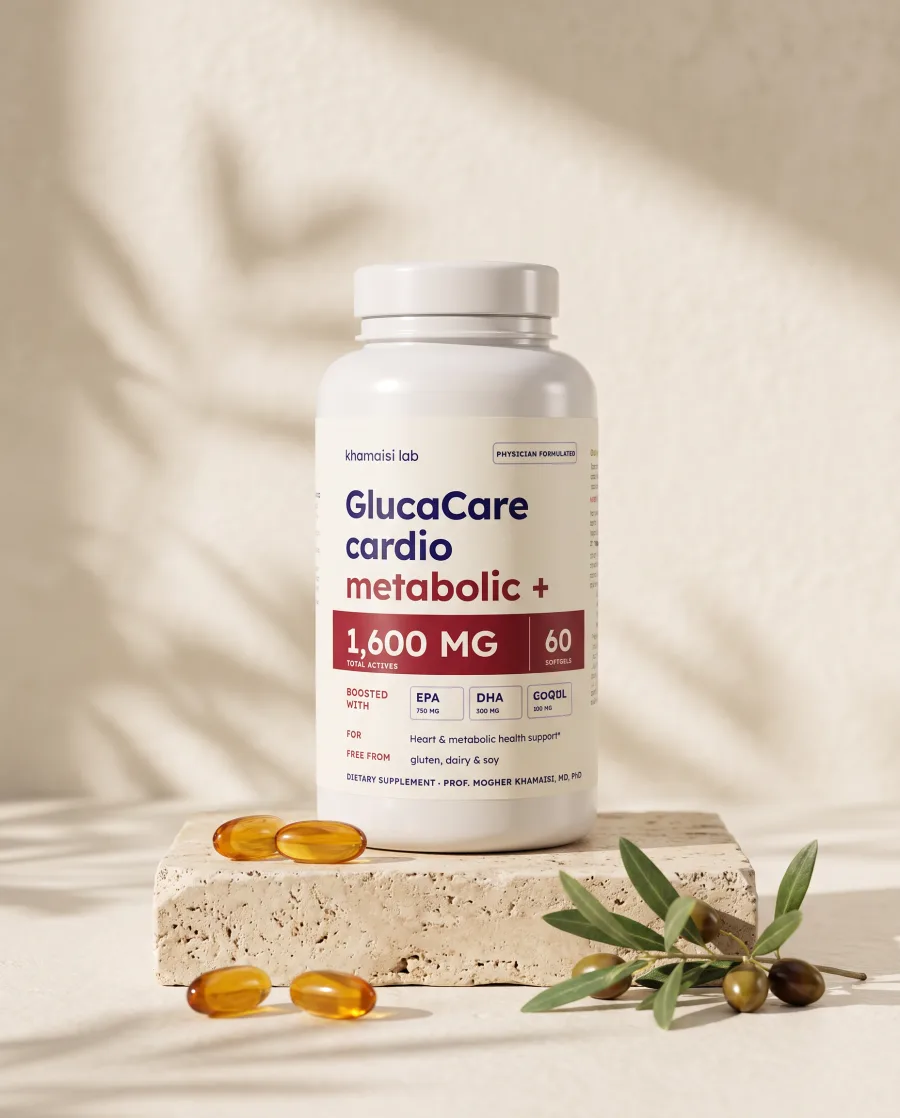
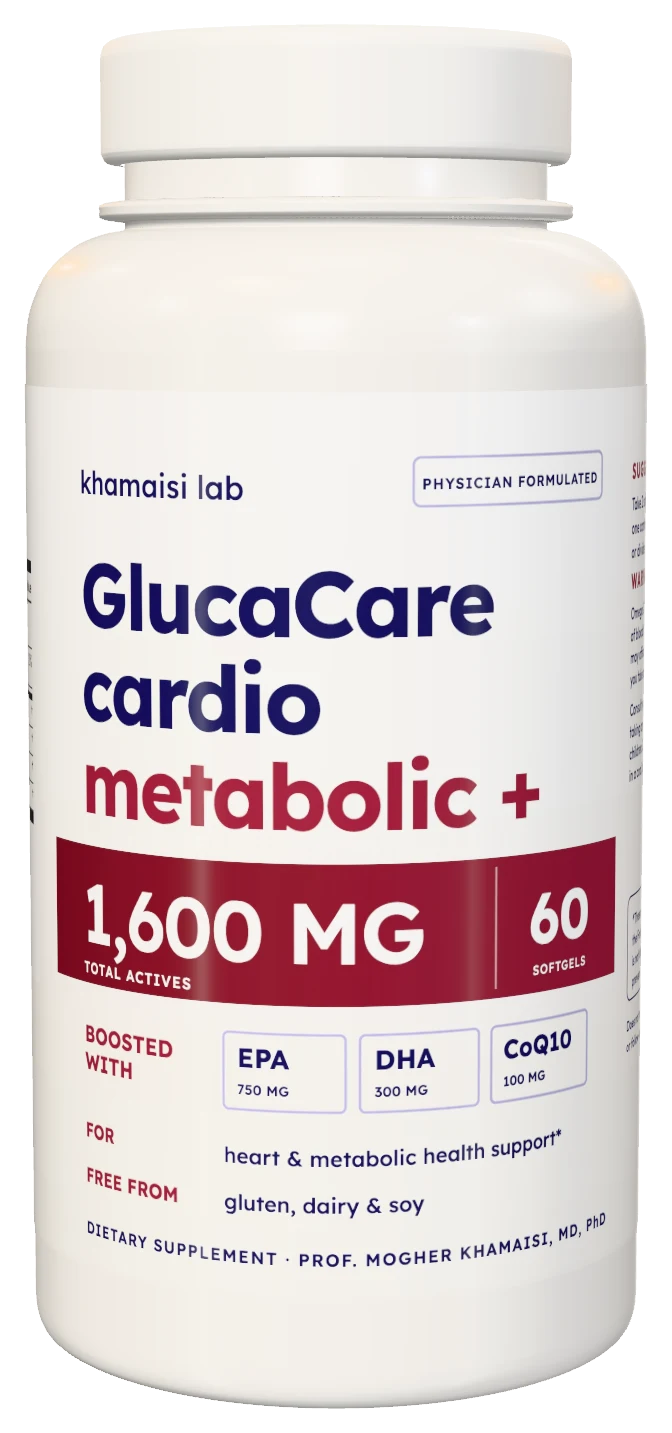
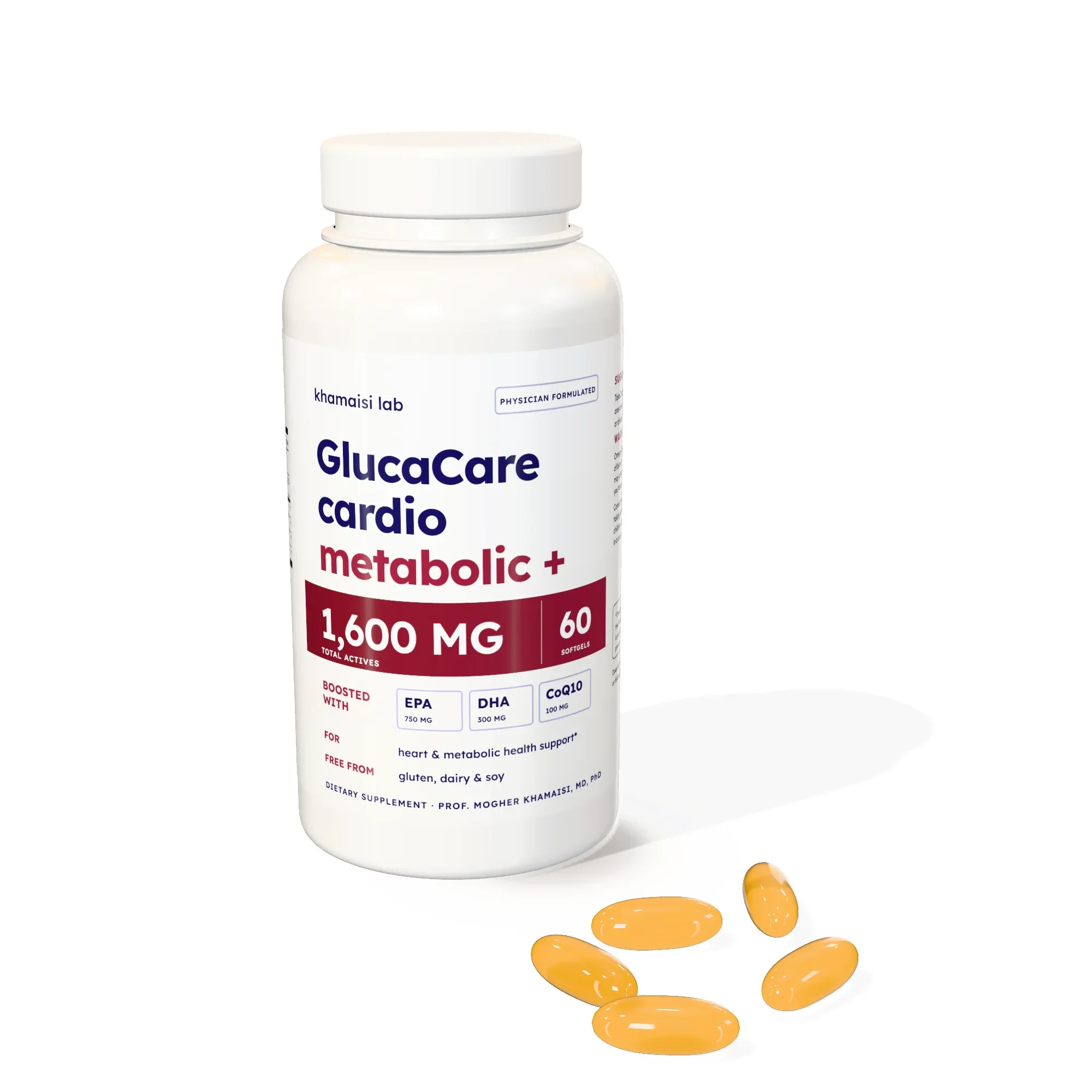
Cardio metabolic + · 1,500 mg
EPA
eicosapentaenoic acid
Supports healthy triglyceride levels already within the normal range and normal heart function.*
Why this form
EPA-forward, at 750 mg EPA to 300 mg DHA, the balance used in much of the cardiovascular research.
Cardio metabolic + · 750 mg
DHA
docosahexaenoic acid
Supports heart health and the normal structure of cell membranes, including in the retina and brain.*
Why this form
Paired with EPA rather than given alone, mirroring fish intake.
Cardio metabolic + · 300 mg
Coenzyme Q10
Supports cellular energy production in the heart and fat-soluble antioxidant protection.*
Why this form
Dispersed in the fish oil inside the softgel, which helps absorption of this fat-soluble compound. 50 mg per softgel.
Cardio metabolic + · 100 mg
Vitamin B12
methylcobalamin
Supports normal nerve function, red blood cell formation and energy metabolism.* [2][3]
Why this form
Methylcobalamin is an active coenzyme form, supplied as a 1% premix (50 mg). A high oral amount relies on passive absorption, useful for people whose B12 uptake is reduced, such as long-term metformin users.
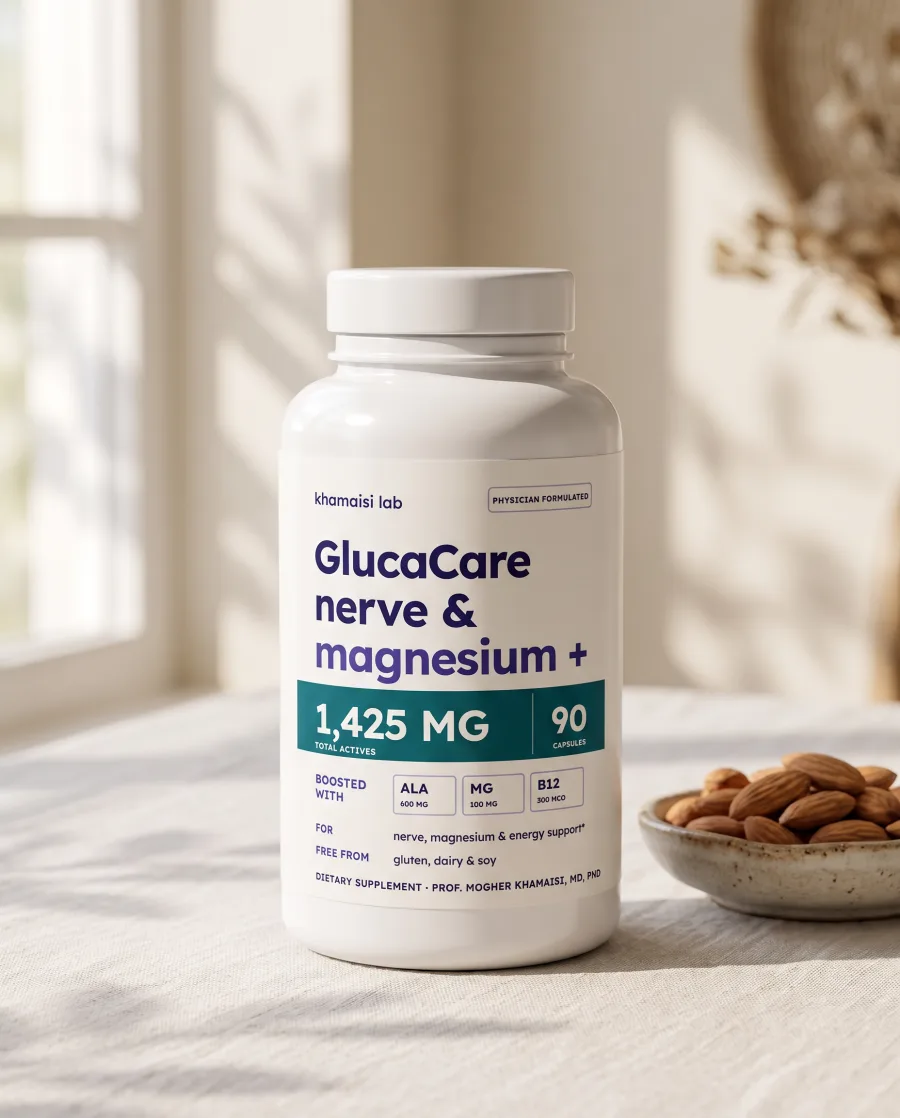
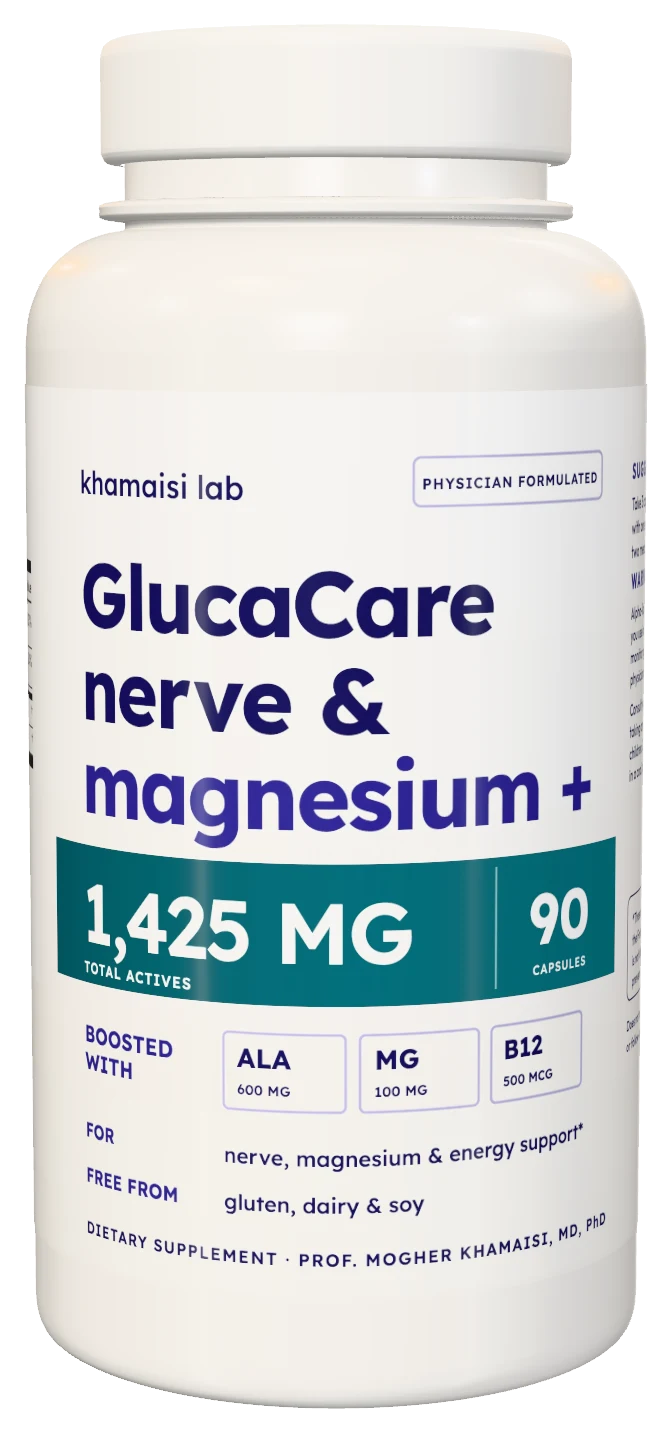
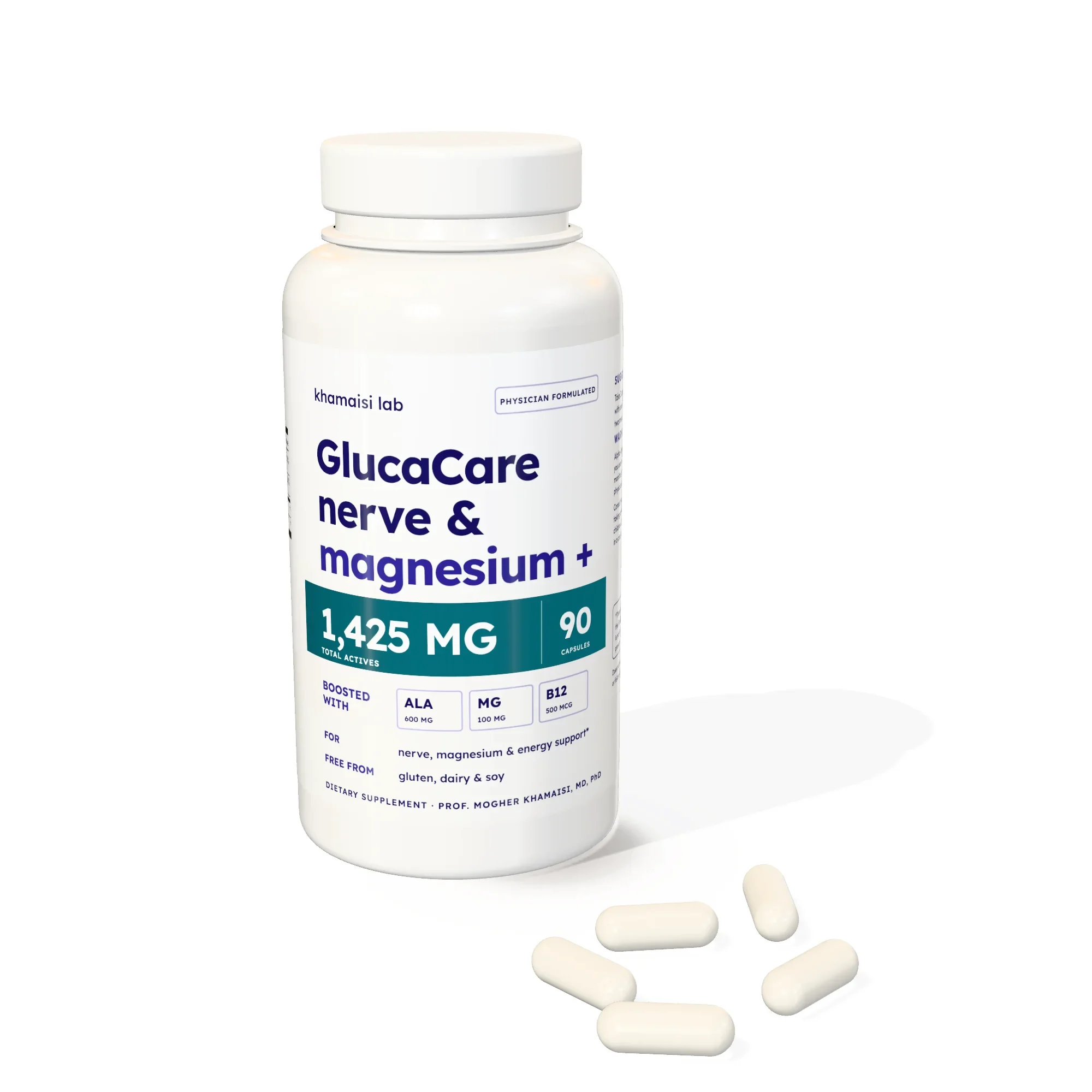
Nerve & magnesium + · 500 mcg
Magnesium
magnesium citrate
Supports normal muscle and nerve function and glucose metabolism already within the normal range.* [1]
Why this form
Magnesium citrate is a well-absorbed organic salt: 625 mg of 16% magnesium citrate supplies 100 mg of elemental magnesium, 24% of the daily value.
Nerve & magnesium + · 100 mg
Alpha-Lipoic Acid
Supports antioxidant defences and normal nerve health.*
Why this form
600 mg is the daily amount most used in human studies.
Nerve & magnesium + · 600 mg
Benfotiamine
Supports normal nerve function and carbohydrate metabolism.* [5]
Why this form
Benfotiamine reaches higher thiamine levels in blood than water-soluble thiamine salts.
Nerve & magnesium + · 150 mg
Vitamin D3
cholecalciferol
Supports normal bone health, muscle function and immune function.*
Why this form
Cholecalciferol raises blood vitamin D more effectively than D2; a moderate dose (125% of the daily value) suits supervised use.
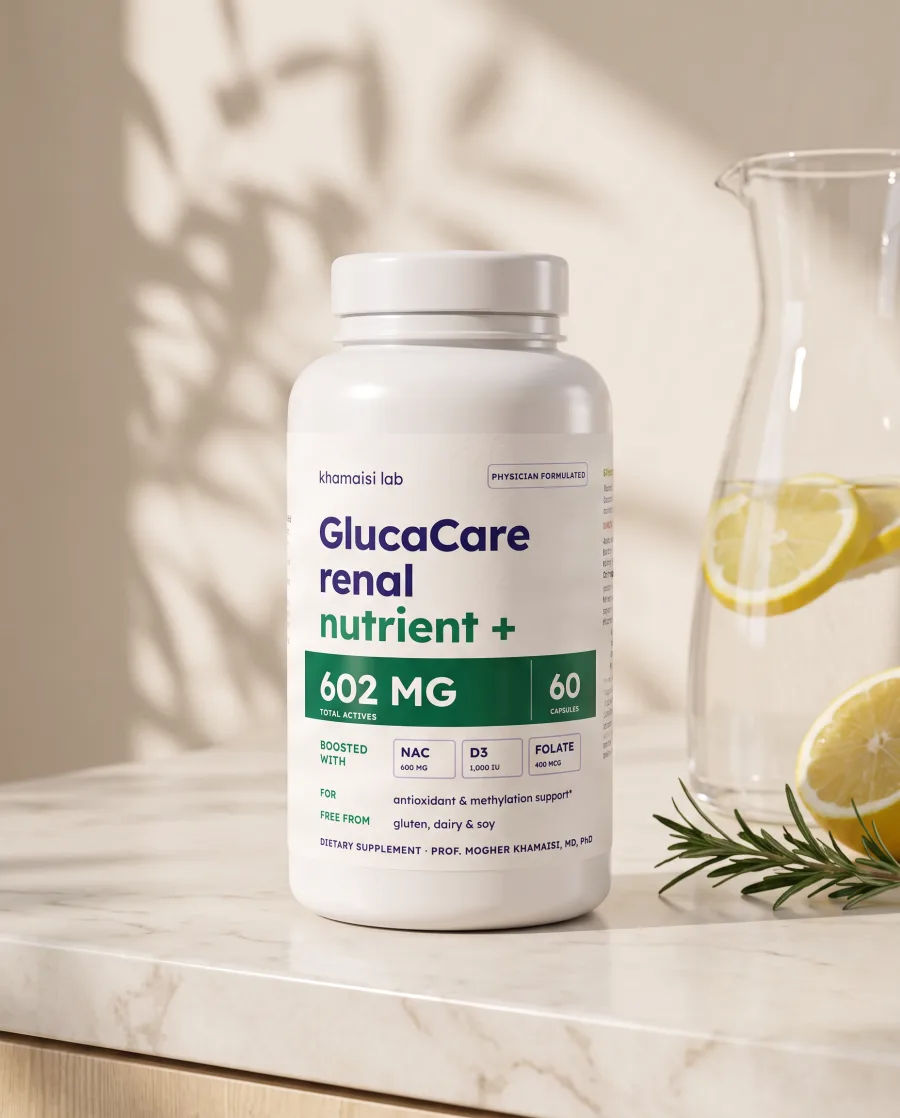
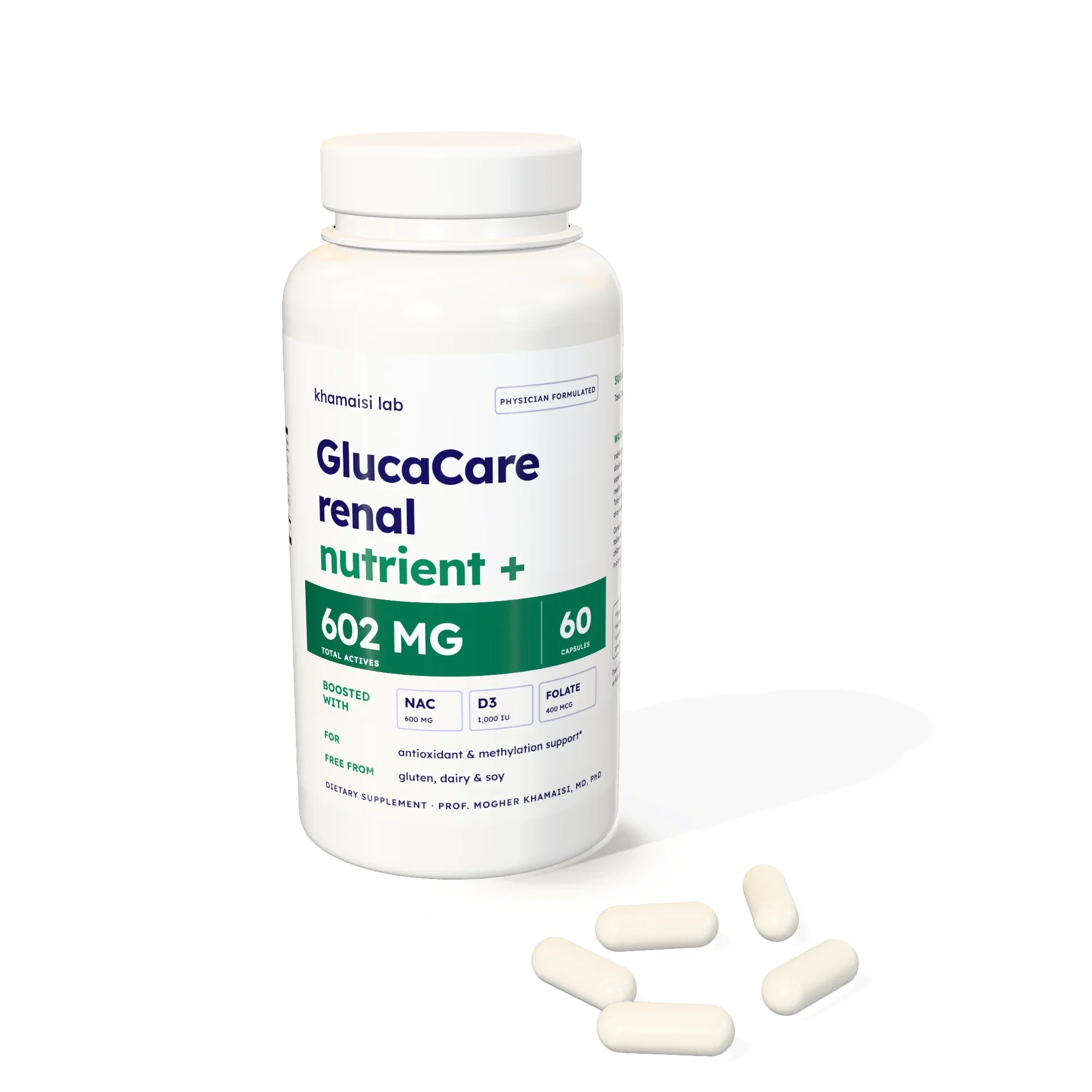
Renal nutrient + · 25 mcg (1,000 IU)
Vitamin B6
pyridoxal-5-phosphate
Supports normal homocysteine and amino acid metabolism.*
Why this form
P-5-P is the active coenzyme form, needing no conversion. 2 mg is 118% of the daily value, well below the 12 mg a day total to stay under from all products.
Renal nutrient + · 2 mg
Folate
L-5-methyltetrahydrofolate
Supports normal homocysteine metabolism and red blood cell formation.* [4]
Why this form
L-5-MTHF is the active methylated form and does not depend on the MTHFR conversion step. 400 mcg DFE is 100% of the daily value.
Renal nutrient + · 400 mcg DFE
N-Acetyl Cysteine
Supports the body's own antioxidant (glutathione) production.*
Why this form
The acetylated form of cysteine is stable and well studied at 600 mg doses.
Renal nutrient + · 600 mg
Vitamin C
ascorbic acid
Supports antioxidant protection and normal collagen formation.*
Why this form
Ascorbic acid is the standard, well-absorbed form.
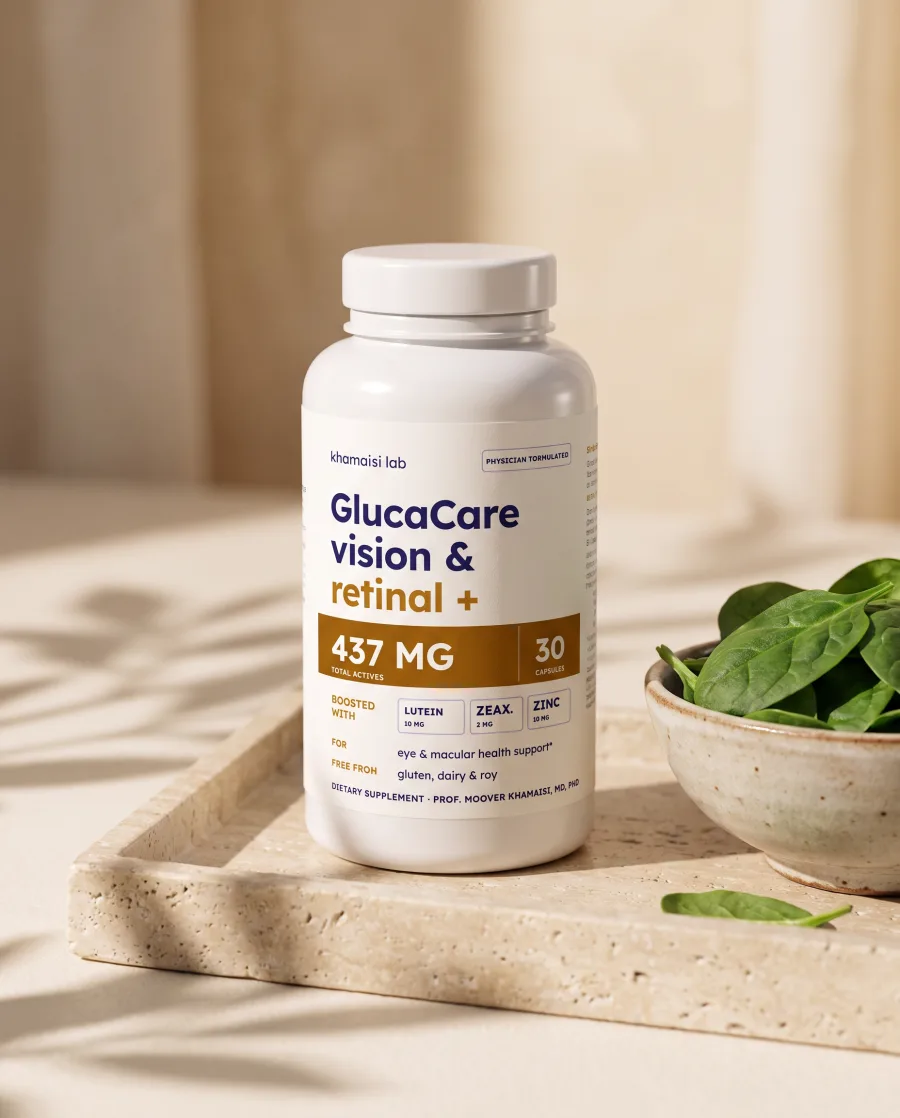
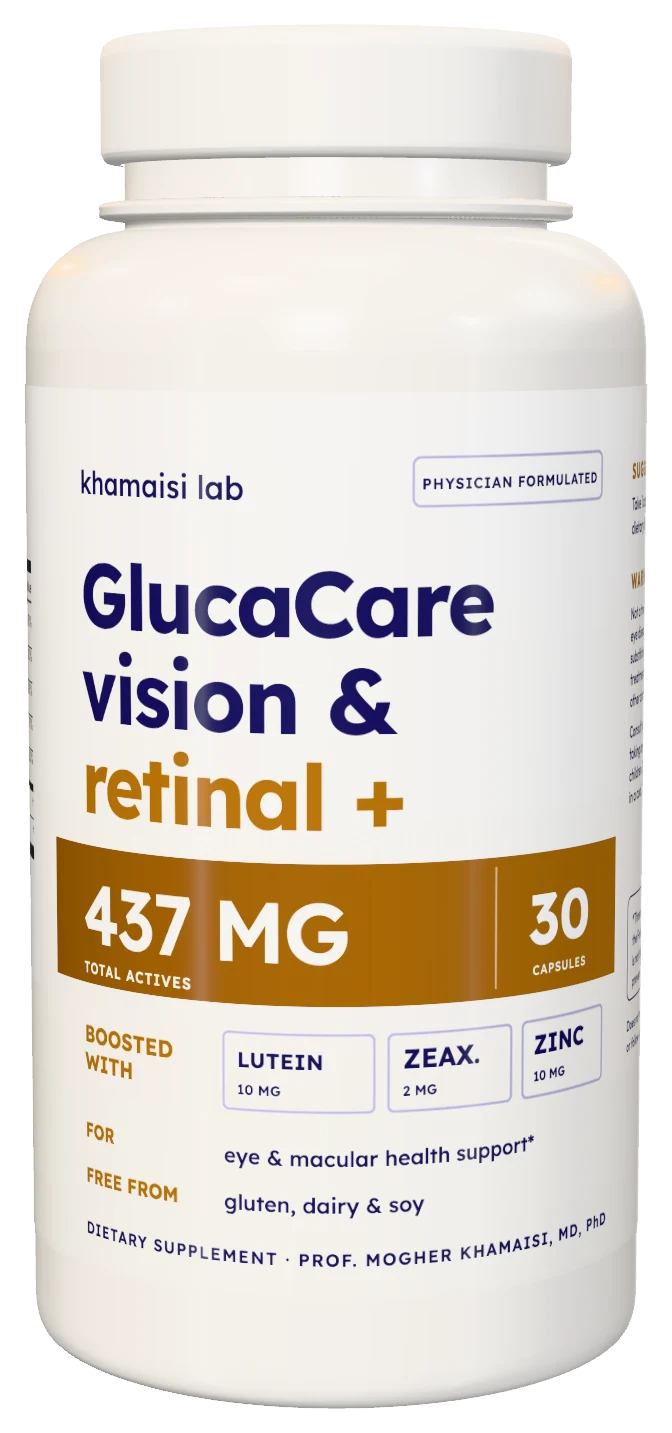
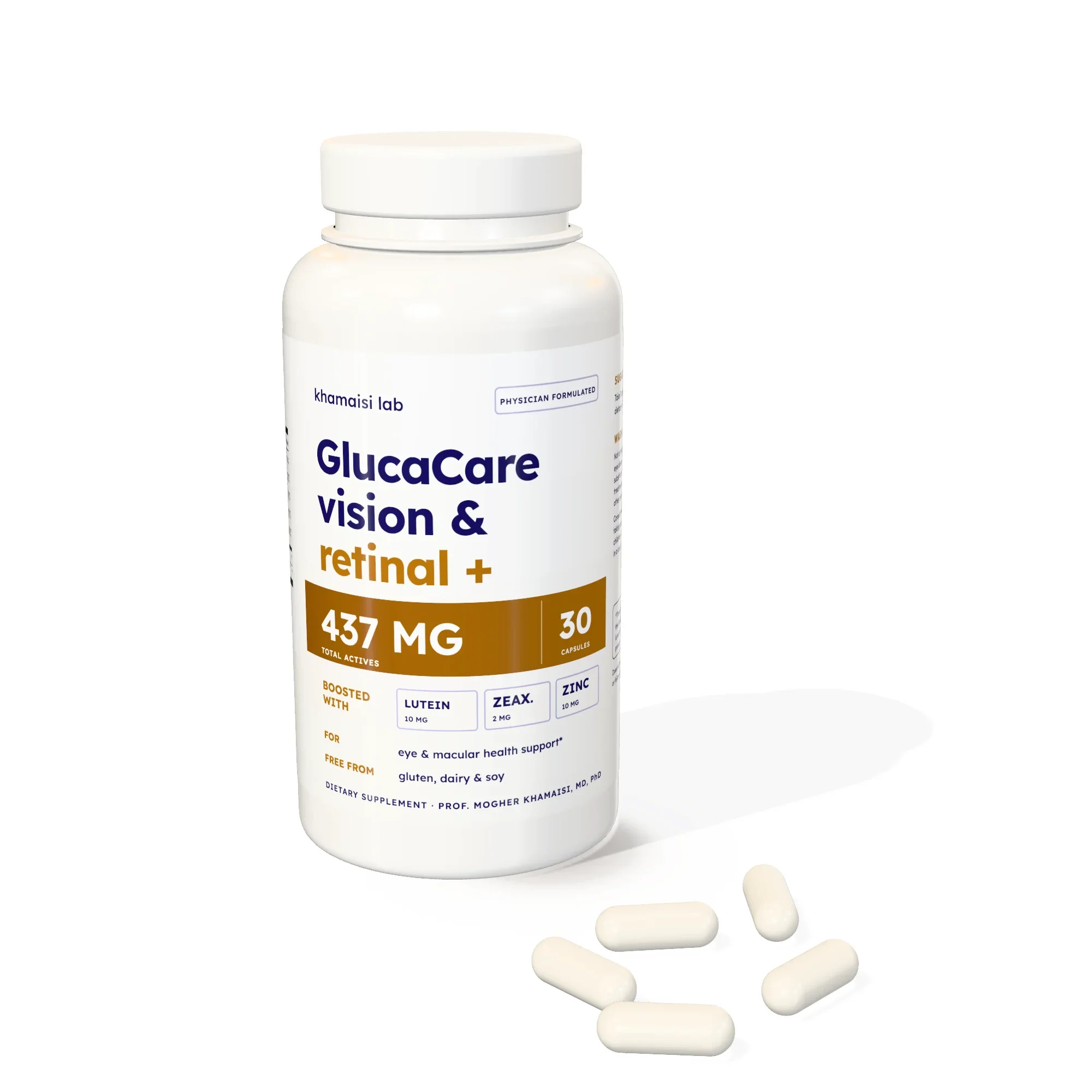
Vision & retinal + · 250 mg
Vitamin E
d-alpha tocopherol
Helps protect cell membranes from oxidative stress.*
Why this form
Supplied as a 50% vitamin E powder (30 mg), at 100% of the daily value.
Vision & retinal + · 15 mg
Zinc
zinc citrate
Supports normal vision and the function of retinal enzymes.*
Why this form
Zinc citrate is well absorbed; a moderate dose balanced with copper.
Vision & retinal + · 10 mg
Copper
copper gluconate
Supports normal antioxidant enzyme activity and iron metabolism.*
Why this form
Included because zinc intake can lower copper status.
Vision & retinal + · 1 mg
Selenium
selenium yeast
Supports antioxidant selenoproteins such as glutathione peroxidase.*
Why this form
Selenium yeast supplies organic selenium forms, at 100% of the daily value.
Vision & retinal + · 55 mcg
Lutein
Supports macular pigment and visual function.*
Why this form
10 mg is an amount studied for lutein in human research, including the AREDS2 study. This product is not the AREDS2 formula.
Vision & retinal + · 10 mg
Zeaxanthin
Supports macular pigment at the centre of the macula.*
Why this form
2 mg alongside 10 mg lutein, the carotenoid pairing studied in human research. This product is not the AREDS2 formula.
Vision & retinal + · 2 mg
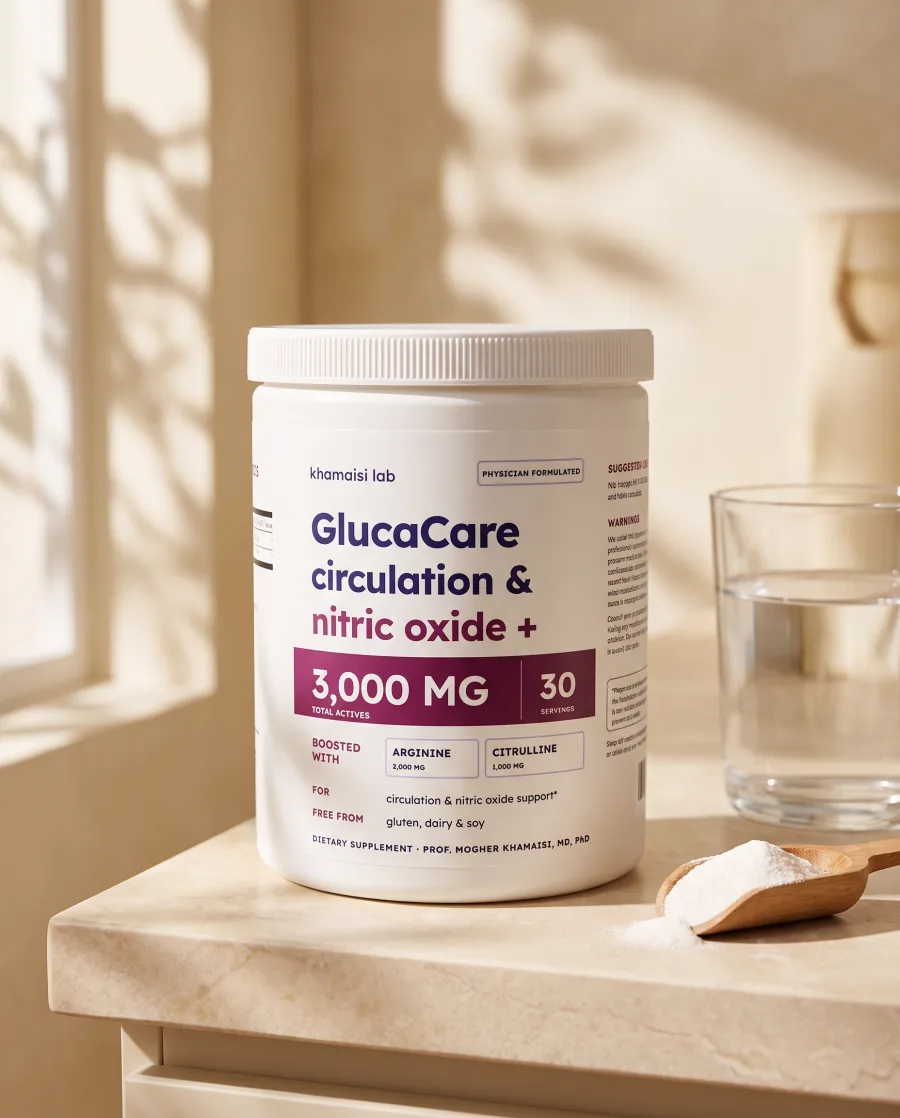
L-Arginine
Supports nitric oxide production and normal blood flow.*
Why this form
The free amino acid gives a direct source of arginine for nitric oxide synthesis.
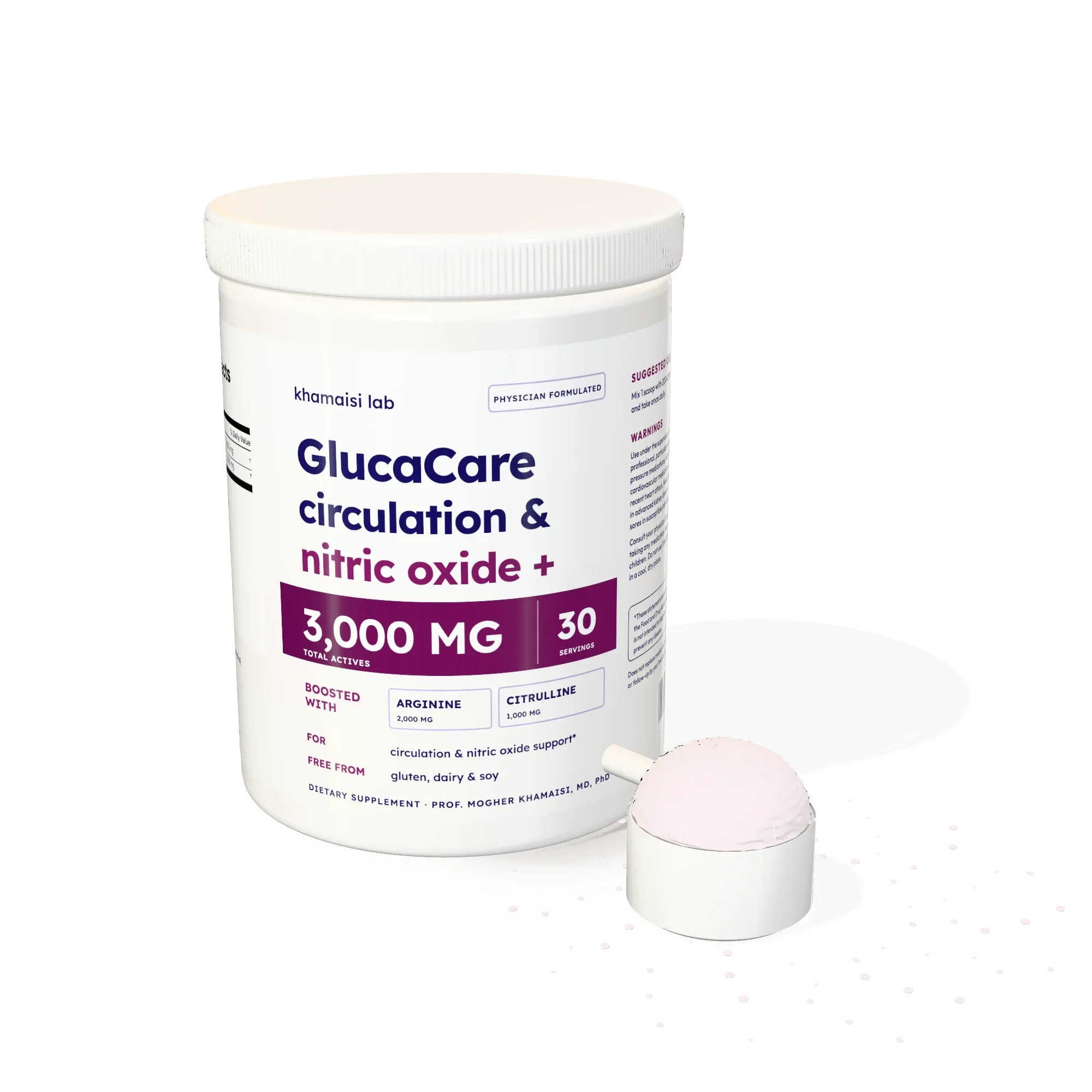
Circulation & nitric oxide + · 2,000 mg
L-Citrulline
Supports arginine levels and nitric oxide production.*
Why this form
Citrulline bypasses breakdown in the gut and liver and raises blood arginine efficiently.
Circulation & nitric oxide + · 1,000 mg
No ingredient matches. Clear the search to see all 21.